Blue and green painter’s tapes are both used for masking and protecting surfaces during painting, but they differ in adhesion strength and ideal surfaces. Blue painter’s tape is a versatile general-purpose tape that offers good adhesion and clean removal on walls, trim, and most indoor surfaces without damaging fresh paint. Green painter’s tape has stronger adhesion and UV resistance, making it better suited for exterior surfaces or prolonged outdoor exposure. Choose blue tape for everyday indoor painting and green tape when you need extra stickiness or outdoor durability.
Blue vs Green Painters Tape: Which One Do You Need?
When prepping your room, choosing between blue vs green painters tape depends entirely on the surface you are protecting. Using the wrong one can lead to “paint bleed” or, worse, peeling the finish off your baseboards.
Quick Comparison: Blue vs Green
Feature Blue Tape (Multi-Surface) Green Tape (Professional/High-Tack) Best For Walls, trim, glass, and metal. Textured surfaces, brick, and stone. Adhesion Medium – easy to remove. High – grips uneven surfaces tightly. Clean Removal Up to 14 days. Usually 3 to 5 days. Edge Tech Designed for sharp, clean lines. Best for preventing seepage on rough wood. Our Top Recommendation
For Sharp Lines: 3M ScotchBlue Multi-Surface
If you are painting standard drywall or trim, this is the gold standard. In the debate of blue vs green painters tape, blue is the winner for indoor DIY projects because it can stay on the wall for up to two weeks without leaving a sticky residue.
For Rough Surfaces: FrogTape Pro Grade Green
If you are taping off a brick fireplace or heavily textured “orange peel” walls, green is the way to go. It has a higher tack (it’s stickier), which prevents paint from creeping under the gaps caused by the texture.
Painter Tape: Types, Using & Mastering Professional Masking Tape, Choose the Right One
Choosing the right painter’s tape can make a huge difference in your painting project. You might have come across blue and green painter’s tapes and wondered which one is best for your walls.
Picking the wrong tape can lead to messy edges, peeling paint, or wasted time. But don’t worry—this guide will help you understand the key differences between blue and green painter’s tape so you can make the smartest choice. Keep reading, and you’ll know exactly which tape will give your walls a clean, professional finish every time.
Adhesive performance is a variable of surface roughness and “dwell time.” The study highlights that “Tape Tests” (ASTM D3359) show adhesive failure occurs when the tape’s internal cohesion is higher than the bond to the substrate, a key factor in why high-tack green tape pulls paint from drywall.
What Is Blue And Green Painter Tape
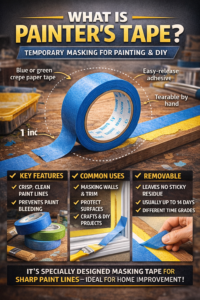
Blue painter’s tape is a type of adhesive tape designed for painting projects. It is made to stick temporarily to surfaces without leaving residue and protect areas from paint, providing clean, sharp paint lines.
Green painter’s tape is a type of masking tape designed for painting, similar to blue painter’s tape, but typically offers stronger adhesion and higher temperature resistance. It is used on delicate or rough surfaces to create clean paint lines without leaving residue, and is often preferred for outdoor or professional painting projects.
Blue Tape Features
Blue painter tape is a versatile tape used for many indoor and outdoor painting jobs. It is known for its strong adhesion and clean removal. This tape works well on smooth surfaces like glass, metal, and trim. It prevents paint from seeping under the edges, giving sharp paint lines.
Key features of blue painter tape:
- Strong adhesion: Sticks firmly to surfaces without lifting.
- Clean removal: Peels off easily without leaving sticky residue.
- Fade resistance: Does not discolor when exposed to sunlight.
- Surface compatibility: Works on walls, wood, metal, and glass.
- Duration: Can stay on surfaces for up to 14 days.
Green Tape Features
Green painter tape is designed mainly for professional use. It offers stronger adhesion than blue tape. This tape works best on rough surfaces like brick, concrete, and textured walls.
Important features of green painter tape include:
- High tack adhesive: Sticks firmly to rough and uneven surfaces.
- Longer outdoor use: Can stay on surfaces for up to 30 days.
- Residue-free removal: Removes cleanly without peeling paint.
- UV resistance: Handles sunlight exposure without breaking down.
- Surface suitability: Perfect for masonry, stucco, and textured walls.
res and withstands weather. Perfect for painting brick walls or stucco exteriors.
Core Differences: Blue Vs Green Painters Tape
Choosing the right painter’s tape can change the outcome of your painting project. Blue and green painter’s tapes are popular choices but serve different purposes. The core differences between blue vs green painters tape helps pick the best one for your needs. Each tape varies in adhesion, surface compatibility, removal ease, paint bleed prevention, and resistance to UV and moisture. These differences affect the quality of your paint job and how easy cleanup will be.
Adhesion Levels Explained
Adhesion refers to how strongly the tape sticks to a surface. Blue painter’s tape usually has medium adhesion. It sticks well but peels off easily without damaging most surfaces. This makes it ideal for delicate surfaces like freshly painted walls or wallpaper.
Green painter’s tape has stronger adhesion. It holds tighter to rough or uneven surfaces like wood, brick, or metal. This helps create a solid seal against paint bleed but may remove paint or damage surfaces if left too long.
- Blue tape: Medium adhesion, safe on delicate surfaces
- Green tape: High adhesion, better for rough surfaces
Choosing the right adhesion level depends on the surface and project length. Blue tape works well for short-term indoor projects. Green tape fits longer outdoor jobs or rough surfaces requiring a tight seal.
Surface Compatibility
Surface compatibility defines which materials the tape sticks to best without damage.
Blue painters tape suits smooth, clean surfaces like:
- Drywall
- Glass
- Metal
- Plastic
- Fresh paint (after curing)
It’s gentle and prevents peeling or lifting on these surfaces.
Green painters tape is designed for rough or textured surfaces:
- Wood
- Concrete
- Brick
- Stucco
It bonds well to these surfaces, creating a strong barrier against paint bleed.
Using the wrong tape on a surface risks paint damage or poor adhesion. Blue tape may not stick well outdoors or on rough walls. Green tape may lift paint on smooth, delicate surfaces.
Removal & Residue
Easy removal without residue is critical for a clean finish.
Blue tape removes cleanly within 14 days on most surfaces. It peels off without leaving sticky residue or peeling paint.
Green tape can stay on longer, up to 21 days, but may leave adhesive residue if left too long. Removing green tape too late can damage delicate surfaces or paint.
Tips for clean removal:
- Remove tape slowly at a 45-degree angle.
- Keep removal time within recommended limits.
- Use a hairdryer to warm tape if residue sticks.
Blue tape offers safer removal on delicate surfaces. Green tape requires more care during removal to avoid damage.
Paint Bleed & Finish Quality
Preventing paint bleed is key to sharp, professional lines.
Blue tape provides moderate paint bleed resistance. It works well on smooth surfaces with careful application. Use multiple coats of paint to improve the seal.
Green tape offers superior paint bleed protection. Its strong adhesion and thicker paper create a tight barrier against paint seepage. It suits rough or textured surfaces where paint bleed risk is higher.
For a clean edge:
- Press tape edges firmly before painting.
- Apply paint in light coats.
- Remove tape before paint fully dries.
Green tape helps achieve sharper lines on tough surfaces. Blue tape works well on smooth, less porous surfaces.
Uv & Moisture Resistance
Resistance to UV light and moisture affects tape performance outdoors or in humid areas.
Blue painters tape offers moderate UV resistance. It can last a few days outside but may degrade or lose adhesion in strong sun or rain.
Green painters tape is designed for outdoor use. It has high UV and moisture resistance, maintaining adhesion for up to 21 days. This makes it ideal for exterior painting or humid environments.
- Blue tape: Best for indoor or short outdoor jobs
- Green tape: Suitable for long outdoor exposure
Choose tape based on exposure time and weather conditions for best results.
Price And Availability
Price varies by brand, size, and tape quality.
Blue painter’s tape is usually cheaper and widely available. It suits most indoor painting needs.
Green painter’s tape tends to cost more due to stronger adhesion and outdoor durability. It may be less common in some stores.
Price comparison example:
| Tape Type | Average Price (per roll) | Common Sizes | Availability |
|---|---|---|---|
| Blue Painter’s Tape | $5 – $10 | 1″, 1.5″, 2″ | Hardware stores, online |
| Green Painter’s Tape | $8 – $15 | 1″, 1.5″, 2″ | Specialty stores, online |
Blue tape fits tight budgets and indoor use. Green tape suits projects needing durability and outdoor exposure.
Comparison Table Of Blue Vs Green Painters Tape
| Feature | Blue Painters Tape | Green Painters Tape |
|---|---|---|
| Adhesion Level | Medium – safe on delicate surfaces | High – strong hold on rough surfaces |
| Surface Compatibility | Smooth surfaces, drywall, glass, metal | Rough surfaces, wood, brick, concrete |
| Removal & Residue | Easy removal, no residue up to 14 days | Longer removal time, may leave residue |
| Paint Bleed Prevention | Moderate, best on smooth surfaces | High, ideal for textured surfaces |
| UV & Moisture Resistance | Moderate, short outdoor use | High, long outdoor use |
| Price | Lower cost, widely available | Higher cost, specialty availability |
Technical Specifications: Adhesion Levels and Removal Durations
To choose the right tool, you must look beyond color and evaluate the mechanical properties of the adhesive. Blue Painter’s Tape is engineered for Medium Adhesion, offering a balanced grip that supports a 14-day Clean Removal window without leaving residue on cured paint or glass. Conversely, Green Painter’s Tape is a High Adhesion solution designed for aggressive bonding to irregular surfaces like brick or stucco; however, its high tack often limits its safe removal window, making it unsuitable for delicate or freshly painted interiors.
The global masking tape market is moving toward “Surface-Aware Adhesion,” where color-coding is becoming secondary to specific chemical formulations for low-VOC paints, which often take longer to cure and are more susceptible to damage from standard blue tapes.
When To Use Each Tape (use-case Scenarios)
Choosing between blue and green painter’s tape depends on the surface, paint type, and project duration. Each tape offers unique features that suit specific tasks. Understanding when to use each tape helps achieve clean lines and prevents paint bleed. This section explains practical use-case scenarios for blue and green painter’s tapes. It guides you to pick the right tape for your painting needs.
What Is Difference Between Painters Tape and Masking Tape? – Pros, Cons & Best Uses
Blue Tape Best Uses
Blue painter’s tape is the most common choice for indoor painting jobs. It works well on smooth surfaces like walls, trim, and glass. Its medium adhesive strength holds firmly but removes cleanly without damaging surfaces.
- Ideal for delicate surfaces such as freshly painted walls or wallpaper
- Great for short-term projects, usually lasting up to 14 days
- Prevents paint bleed on flat or lightly textured surfaces
- Works well with latex and water-based paints
Here is a quick overview of blue tape features:
| Feature | Benefit |
|---|---|
| Adhesion | Medium, sticks well but peels off easily |
| Surface Compatibility | Smooth walls, wood, glass, metal |
| Paint Types | Latex, water-based |
| Duration | Up to 14 days |
Use blue tape for quick indoor projects, especially when you want clean edges without surface damage.
Green Tape Best Uses
Green painter’s tape offers stronger adhesion and is more durable. It suits rough or uneven surfaces, like brick, stucco, or wood grain. Green tape can handle longer paint jobs due to its resistance to moisture and UV light.
- Perfect for exterior painting and textured surfaces
- Works well on brick, concrete, stucco, and rough wood
- Supports both latex and oil-based paints
- Lasts longer on surfaces exposed to sunlight and moisture
Green tape features at a glance:
| Feature | Benefit |
|---|---|
| Adhesion | Strong, holds on rough surfaces |
| Surface Compatibility | Textured walls, brick, stucco |
| Paint Types | Latex, oil-based |
| Duration | Up to 30 days or more |
Choose green tape for challenging surfaces or longer projects where durability is key.
Special Scenarios
Certain painting jobs need specific tapes beyond basic blue or green options. For example, delicate wallpaper or freshly painted surfaces may require ultra-low tack tapes. High-heat areas, like near ovens or grills, need heat-resistant tape.
Special use cases include:
- Curved or irregular edges: Use flexible tapes that contour to shapes.
- Multi-day exterior projects: Green tape resists weather and UV damage.
- Metal surfaces with oily residue: Use tapes designed for oily or non-stick surfaces.
- Temporary labeling or masking: Consider tapes with easy removal and no residue.
Here’s a quick decision guide for special scenarios:
| Scenario | Recommended Tape | Reason |
|---|---|---|
| Fresh wallpaper | Ultra-low tack tape | Prevents damage to delicate surface |
| Heat-exposed areas | Heat-resistant tape | Withstands high temperatures |
| Rough textured walls | Green tape | Strong adhesion on uneven surfaces |
| Short indoor projects | Blue tape | Easy removal, clean edges |
Assess the project needs carefully. The right tape ensures neat results and protects surfaces.

Credit: tapemanblue.com
Expert Tips For A Flawless Finish
Choosing between blue and green painter’s tape can impact the quality of your paint job. Both tapes serve different purposes and work best in certain conditions. To achieve a flawless finish, knowing how to use each tape correctly is essential. Below are expert tips that focus on techniques and precautions to get clean, sharp lines without peeling or bleeding.
The “peel Back” Technique
The “Peel Back” technique helps avoid paint peeling and ensures crisp edges. Instead of pulling the tape straight up, peel it back slowly at a 45-degree angle. This reduces the chance of lifting fresh paint.
Follow these steps for best results:
- Wait for the paint to dry to the touch but not fully cured.
- Start peeling the tape back slowly, moving at a 45-degree angle.
- Keep the tape close to the painted surface as you pull.
- If the paint starts to lift, stop and use a sharp knife to cut along the edge.
Benefits of the Peel Back Technique:
- Prevents jagged edges on paint lines
- Reduces the chance of paint peeling
- Works well with both blue and green painter’s tape
| Step | Action | Reason |
|---|---|---|
| 1 | Wait for paint to dry to touch | Prevents paint from running or smudging |
| 2 | Peel tape at 45-degree angle | Reduces paint lifting from surface |
| 3 | Use knife if paint starts to lift | Keeps lines sharp and clean |
Temperature Sensitivity
Blue and green tapes react differently to temperature changes. Understanding this helps avoid tape failure during painting projects.
Blue painter’s tape performs best in moderate temperatures. It sticks well but may lose adhesion below 50°F (10°C). High heat (above 90°F or 32°C) can cause it to become too sticky and hard to remove cleanly.
Green painter’s tape is designed for more extreme conditions. It works well in both low and high temperatures, making it ideal for outdoor or longer projects.
Here is a quick guide:
| Type of Tape | Best Temperature Range | Notes |
|---|---|---|
| Blue Tape | 50°F – 90°F (10°C – 32°C) | Good for indoor use, easy removal |
| Green Tape | 35°F – 120°F (2°C – 49°C) | Strong adhesion, good for outdoor projects |
Keep tape away from extreme cold or heat during application. Also, store rolls in a cool, dry place to maintain quality.
How To Prevent Paint Bleed
Paint bleed happens when paint seeps under the tape edges, ruining sharp lines. Preventing bleed requires careful preparation and the right tape choice.
Follow these tips to stop paint bleed:
- Use the correct tape: Blue tape works for smooth surfaces, while green tape suits rough or textured surfaces better.
- Press tape edges firmly: Use a putty knife or your fingernail to seal edges before painting.
- Apply a thin layer of base color: Paint along the tape edge with the base wall color first. This seals gaps and blocks bleed.
- Use thin coats of paint: Thick paint can cause runs and bleed under tape.
- Remove tape at the right time: Pull tape off after paint dries to touch, not fully hardened.
Here is a quick checklist for bleed prevention:
1. Choose tape for surface type.
2. Press edges firmly.
3. Seal edges with base color.
4. Apply thin paint coats.
5. Remove tape at the right drying stage.

Credit: www.youtube.com
Frequently Asked Questions
What Is The Main Difference Between Blue And Green Painters Tape?
Blue tape is for general indoor use with medium adhesion. Green tape offers stronger adhesion and is ideal for delicate or outdoor surfaces, providing clean lines without damage.
Which Tape Is Better For Delicate Surfaces?
Green painters tape is better for delicate surfaces. It sticks well but removes cleanly without leaving residue or damaging paint or wallpaper.
Can Blue Painters Tape Be Used Outdoors?
Blue tape can be used outdoors but for short durations. It may lose adhesion under harsh weather, unlike green tape which is more weather-resistant.
How Long Can You Leave Blue And Green Tape On Walls?
Blue tape can stay on walls up to 14 days. Green tape can last longer, up to 21 days, without leaving residue or peeling paint.
Conclusion
Blue and green painter’s tape each suit different jobs. Blue tape works well on rough surfaces and holds paint edges clean. Green tape sticks better on delicate walls without damage. Choose the tape based on your wall type and project needs.
Both help create sharp paint lines and reduce mess. Using the right tape saves time and effort. Your paint job will look neat and professional. Simple choices make painting easier and more satisfying.