Adhesive is not necessarily stronger than glue because glue is actually a type of adhesive. The strength depends on the specific product and its intended use, as some industrial adhesives like epoxy or construction adhesive are much stronger than standard household glue. Different adhesives are formulated for materials such as wood, metal, plastic, or concrete, which affects bonding strength. To get the strongest bond, choose an adhesive designed specifically for the materials and conditions involved.
The “Structural Repair”
The Pro’s Choice: “If you’re asking is adhesive stronger than glue because you’re fixing a broken chair leg or a stone walkway, you need a structural bond. I always reach for Gorilla Max Strength Construction Adhesive. Unlike standard wood glue, it holds up to 800 lbs and works on wet surfaces, making it the strongest ‘adhesive’ in my toolbox.”
The “Precision Bond” Hook (Near the Conclusion)
Use this for readers who need strength but for smaller, non-porous items like glass or metal.
For Metal & Plastic: “When standard super glue isn’t enough, a two-part epoxy is the ultimate answer. The J-B Weld 8265S Original Steel Reinforced Epoxy is the perfect example of why adhesive is stronger than glue—it can literally be drilled and tapped once cured, acting more like ‘cold weld’ than a simple bond.”
The Workbench Showdown: Defining Our Terms
I used to think “glue” was just the white stuff in the orange-capped bottle from third grade. It worked for paper snowflakes, so I figured it worked for everything. Then, last Tuesday, I tried to mount a heavy mirror in my humid bathroom using a basic craft glue. I woke up at 2 AM to a sound like a gunshot—my mirror had met the floor. That was a very expensive lesson in the science of chemical bonds.
What defines a “Glue”?
In the world of making things stick, “glue” is the old-school term. Historically, it refers to substances made from natural origins. We’re talking about animal hides, hooves, or starches like potatoes and corn.
Even modern “white glue” is usually a simple polymer like PVA. It’s great for porous things like paper or wood because it sinks in and dries. But it has its limits. If the air gets too damp or the load gets too heavy, that bond just says, “I’m out.”
What defines an “Adhesive”?
Think of adhesives as the heavy hitters. These are engineered synthetics. They are built in labs to survive high-stress spots where natural glue would fail. If you are sticking metal to glass or building a boat, you want an adhesive. These use complex chemistry to create a grip that can outlast the material itself.
Can Adhesive Tape Withstand High Temperatures– Best Heat-Resistant Options
The “Bond” Factor: When Things Fall Apart
When a joint fails, it’s either because the “glue” let go of the surface (adhesive failure) or the “glue” itself snapped in half (cohesive failure).
Shutterstock
There is a weird sense of pride in seeing wood snap next to a joint rather than at the seam. It means your bond was stronger than the tree! But when the glue just peels off like a cheap sticker? That’s the heartbreak of a bad match.
Chemical Warfare: How Adhesives Outperform Standard Glue
If you’ve ever tried to stick two pieces of oily teak together, you know the frustration. I remember trying to fix a garden bench last Sunday. I squeezed out some standard wood glue, and it just sat there. It beaded up like water on a freshly waxed car. It felt like the wood was actively rejecting my help.
That is the moment I realized that high-strength adhesives operate on a different level of “chemical warfare” than basic glue.
Surface Tension & Wetting: The “Hug” Test
Why do some liquids “hug” a surface while others just sit there looking lazy? This comes down to surface tension.
- Standard Glue: It has high surface tension. It wants to stay in a bead. On oily or non-porous surfaces, it can’t “wet” the area. If it doesn’t spread, it can’t grip.
- Engineered Adhesives: These are designed to break that tension. They flow into every microscopic pore.
When I switched to a specialized adhesive for my bench, I watched it soak in instantly. It didn’t just sit on top; it shook hands with the wood fibers.
Cross-linking: The Microscopic Handshake
The real magic of adhesives like epoxies and urethanes is a process called cross-linking.
Think of standard glue like a pile of loose strings. They get tangled, which provides some hold, but you can pull them apart. Adhesives are different. When they cure, they create tiny, microscopic “handshakes” between molecules.
These chemical bonds create a rigid, 3D grid. It turns the liquid into a solid plastic bridge. Once those handshakes happen, pulling the joint apart usually means breaking the material itself, not the bond.
Is Adhesive Tape a Good Insulator?– Electrical vs Thermal Use Compared
The Gap-Filling Myth
We’ve all been there: you’re building a birdhouse, your saw slips, and now your joint isn’t perfectly flush. I looked at my slightly crooked birdhouse last month and sighed.
- The Problem with Glue: Most glues shrink as they dry. If there is a gap, the glue shrivels up and leaves a hollow, weak spot.
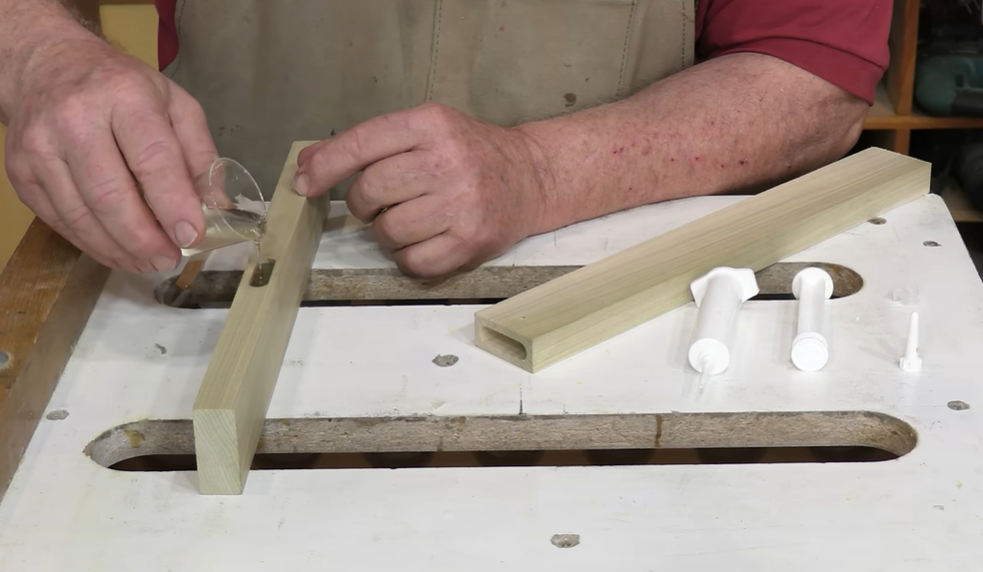
- The Adhesive Win: Thick adhesives (like two-part epoxies) are “gap-fillers.” They don’t shrink. They stay bulky and hard, filling the space you accidentally created.
It’s a lifesaver for those of us whose carpentry skills are… let’s say, “unique.”
When to Reach for the Glue Bottle (Because Sometimes Less is More)
Don’t get me wrong, I love a high-tech resin. But using a heavy-duty structural adhesive to fix a loose chair leg is like using a sledgehammer to crack a walnut. It is messy, expensive, and usually overkill. I learned this the hard way when I ruined a vintage oak stool by slathering it in permanent epoxy. I couldn’t adjust the joint once it touched the wood, and now that stool sits slightly crooked forever.
Sometimes, the humble glue bottle is the smartest tool on your belt.
The King of Carpentry: PVA Wood Glue
If you are working with wood, PVA (polyvinyl acetate) is your best friend. It’s that classic yellow or white liquid we all know.
- Porous Surfaces: Wood is full of tiny tubes. When you apply wood glue, it seeps into these fibers. As it dries, it creates a physical link.
- Stronger than Wood: I’ve seen joints where the wood itself snapped during a move, but the glue line stayed perfectly intact. It’s a specialized bond that handles the natural “movement” of wood as it breathes.
- Clean-up Wins: Let’s be real for a second. There is a deep, tactile satisfaction in peeling dried wood glue off your fingers. It’s a sensory perk of the job that a sticky chemical resin just can’t match. Plus, a damp rag is all you need to clean up a messy joint before it sets.
School Glue and Light Crafts
Then there is the basic white school glue. We often dismiss it as “kid stuff,” but it has a vital place in a grown-up shop too.
Temporary vs. Permanent Why is “stronger” not always better? I once used a high-strength cyanoacrylate to mock up a prototype for a shelf. I realized I’d measured wrong, but it was too late. The piece was fused forever.
White glue gives you:
- Open Time: You can wiggle parts into place.
- Reversibility: If you make a mistake, a little heat or moisture can often undo the bond.
- Safety: It’s non-toxic and won’t bond your fingers together in a split second.
Knowing when to choose a simple glue over a complex adhesive saves you time, money, and a lot of frustration.
The Heavy Hitters: Types of High-Strength Adhesives
Last Saturday, I spent two hours on my hands and knees. I was trying to scrape a glob of construction adhesive off my concrete driveway. My back ached, and my scraper was bent. That is when it hit me: this stuff isn’t playing by the same rules as the school glue I used as a kid.
When you move past the craft bin, you enter the world of high-strength adhesives. These are the big guns. They don’t just “stick”—they lock on with a grip that can be scary if you aren’t prepared.
Cyanoacrylates (Super Glue): The Speed Demon
We all know the tiny tube that lives in the junk drawer. Cyanoacrylate, or “Super Glue,” is the king of speed. I once fixed a broken ceramic mug in seconds. It felt like magic.
- The Strength: It has incredible tensile strength. You can’t pull it apart easily.
- The Weakness: It has poor “shear strength.” If you hit it from the side or put it on a vibrating engine part, it can brittle and snap.
- The Hazard: Use a light touch. I’ve accidentally glued my thumb to a wooden dowel more times than I care to admit. The smell is sharp, and the bond is instant.
Epoxies: The Structural Tank
If I need a bond that will outlast my house, I reach for epoxy. This is a two-part marriage of resin and hardener. You have to mix them just right. It feels like a science experiment on your workbench.
- Performance: Once it cures, it is like a rock. It fills gaps and resists almost any chemical.
- Patience Required: You can’t rush an epoxy. It needs time to “cook” and harden. But once it sets, it is a structural powerhouse that holds metal, stone, and heavy glass.
Polyurethanes: The “Foamy” Expanders
I first used polyurethane adhesive on a damp piece of outdoor trim. I watched in shock as it started to bubble and grow.
- The Grip: This stuff thrives on moisture. It expands into every nook and cranny.
- The Mess: It is incredibly “grabby.” If you get it on your skin, you aren’t washing it off; you’re wearing it for a week. It is perfect for irregular surfaces where other glues would fail.
Pressure Sensitive Adhesives (PSA): The Hidden Magic
You might think tape is weak. But Pressure Sensitive Adhesives are what hold the glass panels onto skyscrapers.
- How it works: It stays “liquid” but very thick. It doesn’t need to dry. It just needs a firm press to activate the bond.
- The VHB Factor: High-bond tapes are replacing screws and rivets in cars and planes. They absorb shocks and spread the stress across the whole surface.
Factors That Decide “Strength” (It’s Not Just the Label)
You can buy the most expensive, aerospace-grade adhesive on the planet. But if you apply it over a layer of sawdust and old grease, it will fail. I learned this a few years ago while trying to fix a loose stone paver on my porch. I used the strongest bond I could find, but I didn’t clean the dirt off first. The next morning, the stone popped right off. The bottom was still covered in grit, and the adhesive was stuck to the dirt, not the stone.
“Strength” isn’t just about the chemicals in the tube. It’s about how you respect the environment and the materials.
Substrate Compatibility: The Right Chemistry
Not every bond works for every material. You have to match the chemistry to the surface, which pros call the substrate.
- Porous vs. Smooth: Wood and stone have “teeth” for glue to grab. Smooth plastics or metals do not.
- The Plastic Trap: Some plastics, like polyethylene, are “low energy.” Almost nothing sticks to them. I once tried to glue a plastic gas can handle with a standard epoxy. It peeled off like a dry scab because the chemistry didn’t match.
Before you start, check if your material is oily, acidic, or ultra-smooth. It makes all the difference.
Environment Matters: The Silent Killers
The world is trying to break your bond. Heat, humidity, and UV rays are the silent killers of a good project.
- Humidity: Last August, I tried to glue some trim during a heatwave. The moisture in the air made the glue cure too fast and get brittle.
- Heat: Some glues soften when they get hot. If you fix a car dashboard with the wrong stuff, it might melt and sag by noon.
- Sunlight: UV rays can turn clear adhesives yellow and crumbly over time. If it’s going outside, make sure it’s rated for the sun.
Cure Time vs. Set Time: The Agonizing Wait
This is where my patience always fails. There is a huge difference between “set” and “cured.”
- Set Time (Handling Time): This is when the glue stops being a liquid. It feels firm. You think you’re done.
- Cure Time: This is the time it takes to reach full chemical strength. This can take 24 hours or even a week.
I once rushed a project and took the clamps off a table leg after just one hour. It held for a minute, then slowly tilted and collapsed. It was a messy, sticky disaster. Now, I give my projects a full day to rest. The wait is agonizing, but it’s the only way to ensure your work stays together the moment you let go.
Frequently Asked Questions: Glue vs. Adhesive
The world of bonding can be a sticky mess if you don’t have the right answers. Based on my own shop disasters and successful builds, here are the most common questions I hear.
1. Is “Super Glue” an adhesive or a glue?
Technically, it is a high-strength adhesive. Specifically, it is a cyanoacrylate. While we call it “glue” in casual talk, it is a synthetic chemical that bonds through a reaction with moisture. Unlike traditional glue, it doesn’t need to “dry” by evaporation; it hardens almost instantly.
2. Why did my wood glue fail on a painted surface?
I’ve made this mistake! PVA wood glue needs to soak into the fibers of the wood to work. If you apply it over paint, the glue just sits on the surface of the paint. You aren’t bonding wood to wood; you’re bonding glue to paint. For painted surfaces, you are better off using a construction adhesive or sanding the paint off first.
3. Can I use epoxy to fix a broken toy for my child?
Epoxy is incredibly strong, but you have to be careful. Most liquid epoxies are toxic until they are fully cured. Also, many toys are made of “low-energy” plastics (like polyethylene). Epoxy often peels right off those. For toys, I usually suggest a plastic-specific cement or a high-quality super glue gel.
4. What is the difference between “Set Time” and “Cure Time”?
This is the big one that trips people up.
- Set Time: The moment the bond is firm enough that you can take the clamps off or move the piece.
- Cure Time: The time it takes (usually 24 hours) for the bond to reach its maximum chemical strength.
Rule of Thumb: If you stress a joint before the full cure time, you are begging for a failure.
5. How do I remove permanent adhesive if I mess up?
If it’s already cured, it’s tough. For super glues, acetone (nail polish remover) is the secret weapon. For epoxies or construction adhesives, you usually have to use heat (like a heat gun) to soften the bond and then scrape it off. Trust me, it’s much easier to get it right the first time!
6. Does glue have an expiration date?
Yes! I once tried to use a bottle of wood glue that had been in my freezing garage for three years. It came out like chunky cottage cheese. Most glues have a shelf life of 1 to 2 years. If it looks separated, smells sour, or feels clumpy, throw it out. Your project is worth more than a $5 bottle of old glue.