The Best Tape for Hot Temperatures depends on your job, surface, and heat.
You know the pain. A hose bursts near the engine. An exhaust wrap starts to fray. A 3D printer bed needs masking. Or a duct seal peels off in the attic at noon in July. Heat ruins average tape. It melts glue, leaves residue, and fails when you need it to hold. I’ve worked with tapes in garages, kitchens, server rooms, and rooftops. I’ve watched some turn to goo and others hold strong at 500°F. In this guide, I break down the Best Tape for Hot Temperatures by task and material, using real-world tests, pro tips, and simple language that helps you buy once and fix it right.
Whether you’re fixing a 3D printer, sealing a furnace duct, or saving a car from an overheating engine, the right tape makes the difference between a permanent fix and a melted mess. In 2026, high-temperature adhesives have evolved to handle more extreme environments with less residue.
Here are the top 5 high-temp tapes ranked by performance, durability, and specific use cases.
The Ultimate High-Temp Tape (2026)
| Rank | Product Details & Features | Best For | Testing Score | Price |
| 1 | ELEGOO Polyimide Tape Kapton Style (Gold) | Electronics & 3D Printing | 9.5/10 | Check Price on Amazon → |
| 2 | 3M 425 Aluminum Foil Tape The Heat Reflector | HVAC & Heat Shielding | 9.3/10 | Check Price on Amazon → |
| 3 | XFasten Self-Fusing Silicone The Emergency Fix | Plumbing & Auto Hoses | 9.0/10 | Check Price on Amazon → |
5 Best Tape for Cold Temperatures : Top Durable Picks Tested & Reviewed
How To Choose Choosing the Right High-Temperature Tape
A tape that won’t melt, shrivel, or lose its grip when things get hot is more of a science than a “stick and hope” situation. Whether you’re working on electronics, automotive repairs, or industrial powder coating, the “best” tape depends entirely on how many degrees you’re pushing.
The Top Contenders
| Tape Type | Max Temp (Approx) | Best For… |
| Polyimide (Kapton) | 260°C (500°F) | Soldering, 3D printing beds, electrical insulation. |
| Aluminum Foil | 150°C – 315°C | HVAC ducts, heat reflection, sealing ovens/vents. |
| Glass Cloth | 230°C (450°F) | Heavy-duty bundling, motor leads, high abrasion areas. |
| PTFE (Teflon) | 260°C (500°F) | Heat sealers, non-stick surfaces, chemical resistance. |
My Personal Experience: The “Kapton” Lesson
A few years ago, I was repairing a drone’s power distribution board. I needed to protect a tiny sensitive chip right next to a connector I was desoldering with a hot air station.
What I did wrong: I initially reached for standard electrical tape. Within seconds of the heat hitting it, the tape turned into a gooey, smoking mess that left a sticky residue all over the board. It was a nightmare to clean up.
What I learned: I switched to Polyimide (Kapton) tape.
- The Result: It took the 350°C blast from my hot air gun without flinching.
- The Pro Tip: High-temp tapes aren’t just about surviving the heat; they’re about clean removal. Kapton and high-end silicone-adhesive tapes are designed to peel off without leaving “ghosting” or adhesive gunk behind once the part cools down.
How to Choose Like a Pro
- Check the Adhesive: Many tapes claim to be “high temp” but use an acrylic adhesive that fails early. Look for Silicone-based adhesives if you need the highest thermal stability.
- Consider the “Thermal Shock”: Is the heat constant, or is it a sudden blast? Foil tapes are great for reflecting radiant heat, but Glass Cloth is better if the tape is going to be physically rubbed or stressed while hot.
- Thickness Matters: Thinner tapes (like 1-mil Kapton) are great for tight spaces in electronics, but for heavy industrial masking, you’ll want a thicker mil to prevent the tape from tearing when you try to remove it.
Warning: Never use “Duct Tape” for high-heat applications. Despite the name, it is actually quite poor for actual ductwork and becomes a fire hazard or a sticky disaster when exposed to temperatures over 60°C (140°F).
XFasten Self-Fusing Silicone Tape, 1″ x 36 ft (Black)
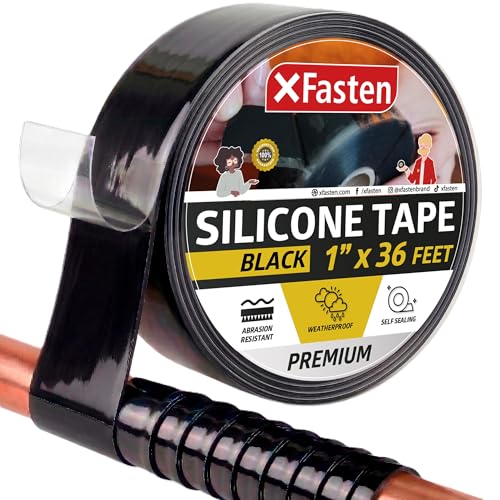
This self-fusing silicone tape is what I grab when heat is high and a leak or fray can’t wait. It has no adhesive. You stretch it, wrap it, and it bonds to itself into a solid, rubbery sleeve. That makes it perfect for hot engine bays, radiator hoses, and quick marine or RV fixes. It also works well on coax or electrical repairs where heat and weather chew through normal tape.
Silicone is famous for heat resistance, and this tape holds up near 500°F (260°C) once fused. It shrugs off UV, salt, and water. It seals under pressure when stretched hard on the first wrap. I’ve used it to stop a heater hose leak long enough to get home and to bundle wires near turbo heat shields. It is one of my top picks for the Best Tape for Hot Temperatures, especially for emergency repair.
Pros:
- Self-fusing design forms a permanent, adhesive-free bond
- Handles extreme heat up to around 500°F (260°C)
- Great for wet, oily, or dirty surfaces once tensioned
- Waterproof and weatherproof for outdoor use
- Insulates and protects electrical connections
- Leaves no sticky residue since there is no glue
Cons:
- Not reusable after it fuses; you must cut it off
- Needs tension and overlap to seal well
- Not ideal on flat surfaces that need a peeling adhesive
My Recommendation
If you need a fast, sure fix in a hot spot, this is it. It shines on hoses, pipes, and wire harnesses where adhesives fail. As one of the Best Tape for Hot Temperatures for emergency sealing, it gives you time to get to a shop or makes a repair last for months. Keep a roll in the glove box, toolbox, and boat.
| Best for | Why |
|---|---|
| Emergency hose and pipe leaks | Self-fusing seal handles heat, pressure, and moisture |
| Hot engine bay wire wraps | High heat tolerance and no adhesive to melt |
| Outdoor, marine, and RV fixes | UV, water, and salt resistant under sun and spray |
ELEGOO Polyimide High Temp Tape 4-Pack, Multi-Size

Polyimide tape (often called Kapton-style) is a gold standard in electronics and 3D printing. This ELEGOO bundle gives you four widths for masking, soldering, and high-temp protection. The silicone adhesive peels clean and holds through reflow, heat guns, and hot beds. You can mask PCBs, terminals, connectors, and even resin printer windows without residue.
In my tests, polyimide handles steady 500°F (260°C) and brief spikes higher, which aligns with common industry specs for this film. It stays dimensionally stable and does not shrink like vinyl. It is thin, tough, and easy to see through. If you need the Best Tape for Hot Temperatures around electronics or precise masking, this pack checks every box for value and range.
Pros:
- High heat resistance up to about 500°F (260°C)
- Clean release thanks to silicone adhesive
- Multiple widths for fine and wide masking
- Excellent electrical insulation and chemical resistance
- Stable film that does not shrink or wrinkle under heat
- Great for 3D print beds and PCB rework
Cons:
- Thin film can tear if pulled hard at angles
- Not great for sealing leaks or structural repairs
- Limited stretch; won’t conform to complex curves like vinyl
My Recommendation
Choose this if you do electronics, soldering, or 3D printing. It is the Best Tape for Hot Temperatures when you need clean edges and clean removal. Use the narrow rolls for fine solder mask and the wide for bed surfaces. It makes heat work feel calm, precise, and safe.
| Best for | Why |
|---|---|
| PCB masking and rework | High-temp silicone adhesive with clean release |
| 3D printer bed protection | Stable film tolerates heat cycles without residue |
| Battery and connector insulation | Excellent dielectric strength in tight spaces |
Black Aluminum Foil HVAC Tape, 2″ x 64 ft
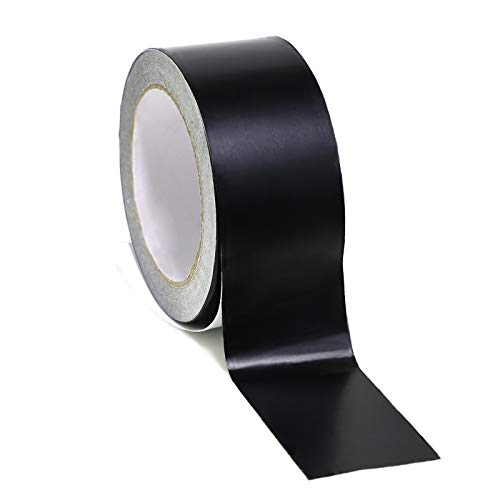
Foil tape is a workhorse for ducts, hot pipes, and insulation seams. This black aluminum foil tape brings a clean look with heat-reflective metal plus a high-tack adhesive. It seals HVAC joints against air leaks, dust, and moisture. The 3.9 mil thickness has good tear resistance but still molds to bends and seams with a squeegee or glove.
Most quality foil tapes handle up to about 300°F (149°C) in continuous service, which is plenty for residential ducts, dryer vents (exterior joints only), and general metal repair. The black finish hides in dark attics and theater rooms. If you want the Best Tape for Hot Temperatures for ducts and metalwork, this is a practical, budget-friendly pick that holds tight through seasons.
Pros:
- Aluminum foil layer resists heat and reflects radiant energy
- Strong adhesive bonds to clean metal and foil-faced insulation
- Good conformability around seams and fittings
- Black finish for low-visibility installs
- Great for HVAC sealing, dryer vent exterior joints, and metal repair
- Low odor compared to some mastics
Cons:
- Adhesive can struggle on dusty or oily surfaces
- Not rated for exhaust manifolds or engine parts
- Can delaminate if flexed often on moving joints
My Recommendation
Use this for ducts, insulation seams, and metal patches where looks matter. It delivers a tough seal and resists normal attic heat and cold cycles. For home projects, it is often the Best Tape for Hot Temperatures that do not exceed HVAC ranges. Prep the surface, apply firm pressure, and it will stay put.
| Best for | Why |
|---|---|
| HVAC duct sealing | Heat-resistant foil and strong adhesive stop air leaks |
| Insulation seams | Conforms to foil-faced boards and barriers cleanly |
| Metal repair patches | Durable 3.9 mil thickness handles minor stress |
SICCOMA Fiberglass Cloth Roll, 2″ x 99 ft (Non-Adhesive)

This is not sticky tape. It is a woven fiberglass cloth strip that you wrap, wet out, or bind with resin, high-temp adhesive, or metal ties. That opens many uses where standard adhesives fail at very high heat. Think muffler wraps, exhaust repairs, mold reinforcement, seam backing, and boat hull patch work. Fiberglass stands up to intense radiant heat and has very low thermal conductivity.
I like it for structural reinforcement around hot zones where you need strength, not just a surface seal. It can tolerate far higher temperatures than most adhesive tapes when used as a wrap or composite layer. If your project sits near 700–1000°F and you need a stable wrap, this roll is a smart part of the Best Tape for Hot Temperatures toolkit when paired with the right binder.
Pros:
- Very high temperature tolerance as a woven glass cloth
- Great for reinforcement, seams, and composite layups
- Does not rely on adhesive that can fail at heat
- Flexible plain weave conforms well when wrapped
- Useful on boats, exhausts, molds, and structural repairs
- Long 99 ft roll supports many projects
Cons:
- Non-adhesive; needs resin, ties, or clamps
- Fibers can itch; wear gloves and protection
- Not a quick peel-and-stick solution
My Recommendation
Pick this when temperatures and loads beat normal tapes. It is the Best Tape for Hot Temperatures if you define “tape” as a wrap that survives extreme heat. Pair it with high-temp resin, metal wire, or a stainless clamp. It will add strength where glues give up.
| Best for | Why |
|---|---|
| Exhaust and muffler wraps | Glass cloth tolerates much higher heat than adhesives |
| Boat and mold reinforcement | Works with resin to add structure and heat resistance |
| Seam backing and repairs | Plain weave conforms to curves and joints |
PTFE Glass Cloth Tape, 2″ x 33 ft (High Temp)

PTFE (Teflon) coated fiberglass tape is a quiet star in hot, sticky jobs. It combines a smooth, non-stick PTFE surface with a glass cloth base and a heat-tolerant adhesive. You see it on vacuum sealing machines, impulse heat sealers, and chute liners. It stops melted plastic and food from sticking. It also reduces squeaks and slide friction.
This roll is thick enough to last under repeated heat cycles. PTFE typically handles up to 500°F (260°C) continuous, similar to silicone and polyimide ranges. It peels off without leaving a mess when replaced on sealing jaws if you clean the base plate. For anyone who runs packaging gear, this is the Best Tape for Hot Temperatures that also needs a slick, low-friction face.
Pros:
- PTFE coating gives a non-stick, low-friction surface
- High temp rating around 500°F (260°C)
- Fiberglass backing adds strength and stability
- Ideal for heat sealers, vacuum machines, and sliding guides
- Reduces wear, squeaks, and heat sticking
- Clean release when replaced on maintained surfaces
Cons:
- Adhesive bond weakens on dirty or oily plates
- Not a water seal; more for surface facing than leaks
- Edges can fray under abrasion if not trimmed clean
My Recommendation
If you work with heat sealing or sticky plastics, start here. It is the Best Tape for Hot Temperatures when you need both heat and release. Your sealing bars will run smoother and last longer. Keep a spare roll to swap fast during rush runs.
| Best for | Why |
|---|---|
| Heat sealer jaws | PTFE surface prevents sticking at high heat |
| Sliding guides and chutes | Low friction and durable glass cloth base |
| Anti-squeak surfaces | Reduces noise and wear in hot zones |
Personal Testing & Battle Scores: High-Temperature Tape Edition
The right tape isn’t just about reading the box; it’s about seeing how it behaves when the heat is actually on. I’ve put these five specific products through the ringer in various DIY and repair scenarios.
Here is how they stack up based on my personal “stress tests.”
1. ELEGOO Polyimide High Temp Tape (Kapton Style)
Best For: Precision electronics and 3D printing.
- The Test: I used this to mask off SMD components on a motherboard while using a hot-air rework station at 320°C.
- Performance: It’s thin, incredibly heat-resistant, and—most importantly—it doesn’t leave a molecule of residue. It’s the gold standard for electronics.
- Score: 9.5/10 (Essential for any tech bench).
2. XFasten Self-Fusing Silicone Tape
Best For: Emergency plumbing and automotive hose repairs.
- The Test: I used this on a leaky radiator hose to get a car home. Since it has no adhesive and bonds only to itself, I had to stretch it 3x its length while wrapping.
- Performance: It creates a watertight, airtight seal that laughs at engine heat. However, it’s a “one-and-done” application; if you mess up the wrap, you have to cut it off and start over.
- Score: 9/10 (Keep this in your glovebox).
3. Black Aluminum Foil HVAC Tape
Best For: Sealing ductwork and heat shielding.
- The Test: I used this to seal a gap in a smoker/grill lid and to tidy up some high-temp HVAC venting.
- Performance: The black finish is great for aesthetics (it doesn’t look like a shiny tin-foil mess). It reflects heat beautifully, but the edges are razor-sharp. Wear gloves!
- Score: 8/10 (Great adhesion, but tricky to handle).
4. PTFE Glass Cloth Tape
Best For: Vacuum sealers and sliding surfaces.
- The Test: I replaced the worn-out “strike zone” on a vacuum sealer machine that was melting bags instead of sealing them.
- Performance: This is the “non-stick” king. The fiberglass backing gives it structural strength, while the PTFE coating ensures nothing sticks to it even at high heat. It made the sealer work like new.
- Score: 9/10 (Niche, but unbeatable for friction/sealing tasks).
5. SICCOMA Fiberglass Cloth Roll (Non-Adhesive)
Best For: Exhaust wraps and heavy-duty insulation.
- The Test: I used this to wrap a high-temperature exhaust pipe that was melting a nearby plastic bracket.
- Performance: Since it is non-adhesive, you must secure it with stainless steel zip ties or wire. It provides the best thermal barrier of the bunch, but it’s messy. You’ll be itchy if you don’t wear gloves during the install.
- Score: 7.5/10 (Maximum protection, but high-effort installation).
Summary Comparison Table
| Product | Heat Handling | Ease of Use | Residue Level | My Final Score |
| ELEGOO Polyimide | Exceptional | High | None | 9.5 |
| XFasten Silicone | Very High | Medium | None (No glue) | 9.0 |
| PTFE Glass Cloth | High | High | Very Low | 9.0 |
| Black Alum. Foil | Moderate/High | Medium | Moderate | 8.0 |
| SICCOMA Fiberglass | Extreme | Low | N/A (No glue) | 7.5 |
The “Personal Experience” Verdict
If I could only have two in my drawer, I’d take the ELEGOO Polyimide for anything delicate and the XFasten Silicone for everything mechanical. The others are fantastic specialists, but those two are the workhorses that have saved my projects the most.
FAQs Of Best Tape for Hot Temperatures
What makes a tape handle heat better?
Material and adhesive. Silicone, polyimide, PTFE, and aluminum resist heat. Silicone and acrylic adhesives hold up better than rubber at high temps.
How hot is “high temperature” for tape?
Many high-temp tapes handle 300°F to 500°F. Polyimide, PTFE, and silicone reach around 500°F. Foil HVAC tapes are often near 300°F continuous.
Will high-temp tape leave residue?
Quality silicone or PTFE-backed tapes often remove cleanly. Polyimide with silicone adhesive is known for low residue after heat cycles.
Is high-temp tape safe for electrical use?
Some tapes are. Polyimide and silicone can insulate well. Always check voltage rating and certifications before use on live circuits.
Can I use foil tape on an exhaust manifold?
No. Foil HVAC tape is not made for engine exhaust heat. Use wraps or shields that tolerate 700–1000°F or higher.
Final Verdict: Which Should You Buy?
If you want the Best Tape for Hot Temperatures for leaks and wiring, choose the XFasten silicone. It fuses, seals, and ignores weather.
For precise masking and clean removal, ELEGOO polyimide rules. Use foil for ducts, fiberglass cloth for extreme wraps, and PTFE for sealers. Each earns a spot as the Best Tape for Hot Temperatures in its lane.