Can I Use Painters Tape For Sublimation?
Yes, you can use painter’s tape for sublimation, but it must be heat-resistant and able to withstand the high temperatures of a heat press without melting or leaving residue. Standard painter’s tape may burn or discolor at sublimation temperatures, so it’s better to use high-temperature masking tapes specifically designed for heat press applications. Properly securing your sublimation design with the right tape ensures clean transfers and prevents shifting during pressing.
The Must-Have Tool: High-Temp Heat Resistant Tape
Don’t risk a $20 blank to save $5 on tape. To get crisp, professional results, you need tape that stays put under pressure.
Best Value Best for Mugs/Tumblers Best for Fabric Selizo 4-Pack Heat Tape Cricut Heat Resistant Tape Extra Wide Thermal Tape Multiple sizes for various projects. Extra strong grip for curved surfaces. Perfect for holding large transfers on shirts. Why we recommend the [Selizo Multi-Size Pack]:
When you’re learning if you can use painter’s tape for sublimation, the biggest hurdle is usually “tape marks.” This multi-pack gives you thin $5mm$ tape for delicate jewelry and wider $10mm$ tape for heavy-duty tumbler wraps. It peels off cleanly every time with zero yellowing.
If you’ve asked yourself can i use painters tape for sublimation, you’re not alone. I run a small sublimation shop and test gear hard before I trust it on client work. In this guide, I’ll share what actually works, where painter’s tape fails, and how to test it yourself. You’ll get clear steps, pro tips, and honest limits so you can press with confidence and protect your blanks.
Can I Use Painters Tape for Posters?– Safe Ways to Hang Wall Art
Sublimation basics and why tape matters
Sublimation turns solid dye into gas under heat. That gas bonds with polyester or poly-coated blanks. A perfect transfer needs steady heat, even pressure, and zero movement.
Tape is your seatbelt. It holds the print still when the press drops. It also helps prevent ghosting, which looks like a faint shadow. People ask can i use painters tape for sublimation because they want a cheap, simple fix. The catch is heat.
Common press settings are 380–400°F for 45–60 seconds on fabric. Mugs and tumblers often run 350–400°F for 3–6 minutes. Many painter’s tapes soften or leave residue at those temps.

Can you actually use painter’s tape for sublimation?
Short answer: yes, but with care. Long answer: it depends on heat, time, and where the tape sits.
Here is when can i use painters tape for sublimation makes sense:
- On the very edge of paper, off the printed area.
- For quick, lower-temp presses, like some HTV-to-poly work at 300–315°F.
- As a helper with shrink sleeves on mugs, away from the image zone.
Here is when it usually fails:
- Directly over printed areas at 380–400°F.
- Long dwell times on hard goods in presses or ovens.
- On sensitive coatings that scuff or pick up glue.
When clients ask me can i use painters tape for sublimation on high-value jobs, I say no. I reach for heat-resistant tape to avoid residue, shifts, and ruined blanks.

Painter Tape: Types, Using & Mastering Professional Masking Tape, Choose the Right One
Painter’s tape vs. real heat-resistant tape
Not all tapes are equal. The adhesive and film matter a lot.
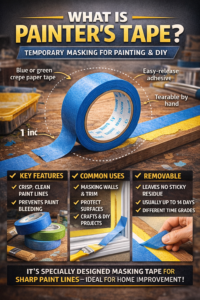
- Painter’s tape
- Film: crepe paper.
- Adhesive: often acrylic or rubber.
- Typical rating: about 200–250°F short term.
- Risks: softens, curls, leaves glue, can stain coatings at high heat.
- Heat-resistant tape (polyimide/Kapton)
- Film: polyimide (amber/brown).
- Adhesive: silicone.
- Rating: 400–500°F short term, very stable.
- Benefits: minimal residue, holds under heat, peels clean.
- High-temp green polyester tape
- Film: polyester.
- Adhesive: silicone.
- Rating: around 400°F.
- Benefits: great for mugs, tumblers, and powder-coated items.
Manufacturers’ datasheets back this up. Silicone adhesives beat acrylic at high heat and peel cleaner. That’s why, if you ask can i use painters tape for sublimation, pros steer you to polyimide or green polyester tape.
Times I’ve gotten away with painter’s tape
I’ve tested many brands. Sometimes painter’s tape did fine, but I used strict rules.
What worked for me:
- Low-temp HTV workflows. Some sublimation-to-HTV presses run near 311°F. I taped the paper corners only. It held well and left no marks.
- Edge-only taping on hard goods. I kept the tape outside the print zone. Then I used a shrink sleeve for pressure in the oven. Clean transfer, no glue trails.
- Fast fabric hits. A very quick press on a poly tee, tape on the paper corners only, light pressure. It held long enough and did not bleed.
What failed:
- Full 400°F mug press with tape over the image. Adhesive smeared, left marks, and caused light ghosting.
- Long tumbler oven cycles. The tape dried out and curled. The print shifted and banded.
Moral: can i use painters tape for sublimation sometimes? Yes. Do I rely on it for paid runs? No.
A safe test to try before a big job
If you still want to try painter’s tape, run this quick test. It can save you time and blanks.
- Pick a scrap blank with a similar coating.
- Tape a printed scrap. Put tape only on the edges. Add a separate strip of tape on bare coating to test residue.
- Press at your real settings.
- Cool fully. Peel slow at 180 degrees back against itself.
- Check for glue, gloss change, paper fiber pull, or shadows.
- Wipe with 91% isopropyl alcohol. If residue remains or the coating dulls, fail the test.
If your test fails, that answers can i use painters tape for sublimation for that setup: not safely.
Best practices to avoid ghosting and residue
Here is how to lock in sharp results, with or without painter’s tape.
- Hinge method. Tape the top edge only, like a book hinge. Swing the paper down. This prevents side-to-side slip.
- Pre-press fabric. 5–10 seconds to drive out moisture. Less steam means less lift and shift.
- Minimal tape. More tape equals more risk. Use two small tabs at corners.
- Cool peel. Let hard goods cool below 120°F before peeling. This cuts adhesive smear.
- Clean surfaces. Wipe blanks and the press pad. Dust can prop the paper up.
- Use blowout paper. It soaks stray dye and protects your pad.
- Right pressure. Too hard makes paper “squirm.” Aim for firm, even pressure.
If you still wonder can i use painters tape for sublimation, these steps make any taping method safer.

Better alternatives to painter’s tape
If the job matters, switch to proven tools.
- Polyimide heat tape. Handles 400–500°F, peels clean, low risk.
- Green polyester tape. Great grip for mugs and tumblers.
- Shrink sleeves for mugs/tumblers. Even pressure, no shifting.
- Silicone bands. Hold tight in ovens without sticky residue.
- Light tack spray for fabric. One mist on the paper back. Keep it far from hard goods to avoid haze.
For most shops, this ends the can i use painters tape for sublimation debate. Use the right tape and forget the drama.
Cost and sourcing: pennies vs. ruined blanks
Painter’s tape is cheap. But a failed mug or a stained tumbler costs much more.
- Heat tape rolls are a few dollars more, but save whole batches.
- Buy 2–3 widths: narrow for corners, wide for mugs, extra wide for wraps.
- Keep tapes in a cool, dry bin. Old tape can leave residue.
- Track waste. If painter’s tape ruins even one premium blank, the “savings” vanish.
When clients ask can i use painters tape for sublimation to save money, I show them my waste log. Switching to heat tape cut my rejects fast.
Frequently Asked Questions of can i use painters tape for sublimation
Is blue painter’s tape heat resistant enough for sublimation?
Usually no. Most blue tapes are rated near 200–250°F, while sublimation runs 350–400°F. They can soften, curl, or leave residue.
Will painter’s tape leave marks on mugs or tumblers?
It can. Adhesive may smear at high heat, causing shiny spots or haze. Use polyimide or green polyester tape for clean results.
Can I use painter’s tape on fabric sublimation?
Sometimes, with quick presses and tape only at corners. Test first on a scrap tee and avoid touching the printed area.
What is the best tape for sublimation?
Polyimide (Kapton) tape with silicone adhesive is the gold standard. Green polyester tape is also great for curved hard goods.
How do I remove tape residue after a press?
Let the item cool, then wipe with 91% isopropyl alcohol and a soft cloth. If residue remains, avoid harsher solvents that can dull coatings.
Can I sublimate without any tape?
Yes, if you use a hinge method and very steady setup on flat items. For mugs and tumblers, shrink sleeves provide pressure without tape.
Is there any case where painter’s tape is fine?
Edge-only, quick, low-temp hits or combined with shrink sleeves, away from the image. Always test your exact settings first.
Conclusion
Painter’s tape can work in narrow cases, but it is not built for true sublimation temps or long presses. If the job is important, use heat-resistant tape, shrink sleeves, or silicone bands, and follow clean press habits. You will protect your blanks, save time, and get sharper color every time.
Try one controlled test today. Compare painter’s tape to polyimide tape on a scrap blank. Then pick the winner for your next project. Want more tested tips like this? Subscribe, leave a comment with your setup, or ask a question—I’m happy to help.